

Autism Diagnostic Training
About the Autism Diagnostic Training Program
A key component of GSAPP’s Autism Training Hub is Autism Diagnostic Training. Our Office of Professional Development and Continuing Education (OPDCE) offers workshops on the ADOS‑2, ADI‑R, and other specialized topics related to autism.
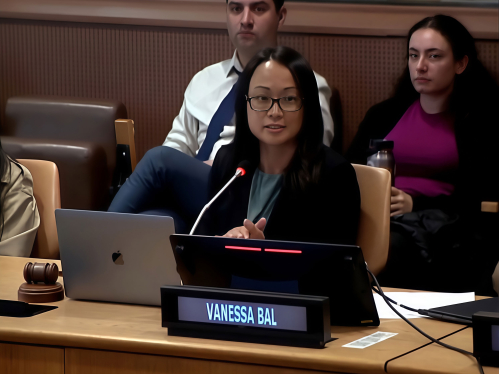
Led by Dr. Vanessa H. Bal, a clinical psychologist and researcher, these programs provide training and continuing education opportunities designed to advance understanding and support of autistic people across the lifespan, with a particular focus on adulthood.
Professional Trainings
-
Register for Adult Autism Assessment Training
Tuesday, October 27, 2026 (online)
9:00 am – 4:30 pm ET
Overview
The increased awareness of autism, including disclosure of diagnosis by high-profile celebrity cases and millions of views of personal accounts of autism on TikTok, has sparked an increase in adult referrals for first-time autism diagnosis. Autism specialty clinics are already plagued by long waitlists and often situated in pediatric settings. Lack of autism training, limited knowledge of the presentation of autism in adulthood, and few psychometrically validated measures for use with adults leave many providers feeling ill-equipped to conduct autism diagnostic evaluations with adults. In many states (including NJ), a formal diagnosis is required to access disability and employment services; thus, barriers to diagnosis can delay or prevent access to essential services.
This workshop will provide a brief overview of the presentation of autism in adults and discuss important considerations for professionals when adults are referred - both for first-time consideration or a re-evaluation of a childhood-established diagnosis.
Topics will include:
- Conceptualizing Autism in Adulthood: research insights into how autism presents in adults and how it evolves from childhood;
- Framing the Diagnostic Process: factors influencing clinical decision-making and diagnosis, including themes from recent research;
- Components of Adult Autism Diagnostic Assessment: a practical overview of assessment elements, including first-time and re-evaluation cases, with discussion on differential diagnosis;
- Post-Diagnosis Considerations: brief insights into support needs and services following diagnosis.
Prerequisites
Master’s degree or higher and relevant work experience or current occupational role. This training assumes prior training and experience in clinical assessment and differential diagnosis. Registrants will be notified if it is determined that these prerequisites are not met and refunded their fee, minus a $75 administrative fee.
Agenda
8:45 - 9:00 Arrive/ introductions 9:00 – 10:00 Conceptualization of autism and factors affecting diagnosis 10:00 – 10:30 Discussion of conceptualization / considering individual biases or assumptions 10:30 – 10:45 Break 10:45 – 12:15 Components of adult autism diagnostic assessment 12:15 – 12:45 Lunch 12:45 – 2:15 Components of adult autism diagnostic assessment (cont.) 2:15 – 3:00 Discussion of individual settings / barriers to implementing best practices 3:00 – 3:15 Break 3:15 – 4:00 Post-Diagnostic Support 4:00 – 4:30 Next steps, Wrap-up Registration fees
- $300 – workshop only
- $350 – workshop + 6 CE
-
Register for the ADOS-2 Introductory Training
Wednesday, November 11 & Thursday, November 12, 2026 (online)
8:30 am - 4:45 pm ET each day
(note: additional upcoming training dates: January 14 & 15, 2027; August 5 & 6, 2027. Registration for these dates will open soon)
Overview
The ADOS-2 is an observational assessment used to aid in the assessment and diagnosis of autism across ages, developmental levels, and language skills. The ADOS-2 introductory training workshop will use a lecture format and video demonstrations to introduce the basic principles of administering and scoring ADOS-2 Modules 1-4 and provide an essential step toward competence in using the ADOS-2 as a part clinical assessment and/or for research purposes. ADOS-2 introductory trainings are designed to assist clinicians and researchers in enhancing the validity and reliability of their autism diagnostic processes.
This 2-day workshop is necessary for anyone planning to use the ADOS-2 in clinical or school settings and serves as a prerequisite for more in-depth training required to obtain research reliability in order to use the ADOS-2 for research purposes. The goals of this workshop are to provide a detailed overview of the ADOS-2, its development, its psychometric properties, and appropriate use and interpretation. Trainees will be provided with videos of other ADOS-2 administrations to watch after the training to supplement the workshop.
Trainees will complete the course with a fundamental understanding of Modules 1-4 and experience observing and scoring two assessments with the support of a certified trainer. By the end of the training, you will have all the info you need in order to administer and score the ADOS-2, but the workshop alone is not sufficient preparation for clinical use. Additional practice is needed to achieve a standardized administration and scoring and you need to be able to give it without the manual in front of you. Tips on how to practice will be provided during the training, but this measure is most appropriate if you will be administering it at least a couple times per month. No additional training is required, but practice is needed.
NOTE: This workshop also serves as the prerequisite to the ADOS-2 Toddler Module Training. We are not offering the 1-day Toddler workshop at this time. If you work with toddlers, we suggest checking our Collaborating Sites for upcoming Toddler workshops.
Required Materials
Prior to attending training, trainees will need to have access to ADOS-2 manuals. These are not provided with the training. ADOS-2 manuals can be purchased directly from the publisher at www.wpspublish.com. Educational discounts on ADOS-2 materials are available for research use and use in training. Authors of the ADOS-2 receive royalties when people purchase these materials.
Prerequisites
Bachelor’s degree or higher and relevant work experience and current occupational role. Trainees will be notified if it is determined that these prerequisites are not met.
This training assumes experience with child assessment and differentiating autism from other diagnoses. If you want more training in this area before taking the ADOS-2 training, we recommend the Introduction to ASD workshop and the Differential Diagnosis workshop offered through the Global Autism Interactive Network (GAIN).
Agenda
Day 1: ADOS-2 Module 3 and Module 4 8:00 – 8:30 Workshop begins at 8:30 EST, please arrive a few minutes early to settle in! 8:30 – 9:30 Introduction to the ADOS-2 9:30 – 11:00 Introduction to ADOS-2 Module 3 and Module 4 11:00 – 11:15 BREAK and submit questions 11:15 – 12:15 Video Administration of Module 3 or 4 12:15 – 12:45 Independent scoring 12:45 – 1:30 Lunch and enter codes 1:30 – 3:30 Discussion of Module 3 / 4 administration and scoring 3:30 – 3:45 BREAK and submit questions 3:45 – 4:45 Large group discussion of scoring issues; Wrap-up discussion of Modules 3 / 4 administration and scoring Day 2: ADOS-2 Module 1 and Module 2 8:00 – 8:30 Workshop begins at 8:30 EST, please arrive a few minutes early to settle in! 8:30 – 10:30 Introduction to ADOS-2 Module 1 and Module 2 10:30 – 10:45 BREAK and submit questions 10:45 – 11:45 Video Administration of Module 1 or 2 11:45 – 12:15 Independent scoring 12:15 – 1:00 Lunch and enter codes 1:00 – 3:00 Discussion of Module 1 / 2 administration and scoring 3:00 – 3:15 BREAK and submit questions 3:15 – 4:45 Wrap-up discussion of Modules 1 / 2 administration and scoring
ADOS-2 Psychometrics
Appropriate Use of the ADOS-2
Other Adaptations (Toddler, Adapted Mod 1&2)
Registration fees
- $600 – workshop only
- $700 – workshop + 14 CE
ADOS-2 training FAQs
For additional information about ADOS-2 trainings and the research reliability process, please see https://med.stanford.edu/autismcenter/autism-diagnostic-training-program-/ados-2-training-faqs.html
-
Register for ADOS-2 Toddler Module Introductory Training
November 13, 2026 8:30 am - 4:45 pm ET
Overview
The ADOS-2 Toddler Introductory Training is an introductory workshop on the ADOS-2 Toddler Module, which is an assessment tool for children ages 12-30 months who are not yet speaking in phrases. It includes lectures and video demonstrations to introduce the basic principles of administering and scoring the Toddler Module. This workshop is designed for researchers and clinicians with prior background in autism spectrum disorder and formal testing, such as speech-language pathologists, physicians, psychologists, special education ASD specialists, and occupational therapists. This workshop is a prerequisite for more thorough training required to use the Toddler ADOS-2 for research purposes.
Co-Presented with Dr. Amy N. Esler
Prerequisites
Trainees must complete the ADOS-2 Introductory/Clinical Training for Modules 1-4 before attending a Toddler Module workshop. In addition, this workshop presumes that trainees will have prior training in and experience with diagnostic assessment of neurodevelopmental disorders in very young children.
Prior to attending training, learners will need to have access to ADOS-2 Toddler Module protocols and manual. These are available through Western Psychological Services at 1-800-648-8857 or at www.wpspublish.com. Educational discounts on ADOS-2 materials are available for research use and use in training. Authors of the ADOS-2 receive royalties when people purchase these materials.
Agenda
8:00 - 8:30 Check-in 8:30 – 10:30 Overview of diagnosing autism in toddlers;
Introduction to Toddler Module;
Overview of Module T administration;
10:30 – 10:45 Break / submit questions 10:45 – 11:45 ADOS-2 Module T administration [VIDEO] 12:15 – 1:00 Lunch 1:00 – 3:00 Review [VIDEO]administration and coding discussion 3:00 – 3:15 Break/Submit Questions 3:15 – 3:30 Overview of algorithms and resulting risk ranges 3:30 – 4:45 Description of Module T development, psychometrics, and current research;
Information for future use and remaining questions
Registration fees
- $300 – workshop only
- $350 – workshop + 7 CE
-
Register for ADI-R Training
Thursday, May 6 & Friday May 7, 2027 (online)
8:00 am - 5:00 pm ET each day
Overview
The Autism Diagnostic Interview – Revised (ADI-R) is a widely used, standardized assessment tool for establishing autism diagnoses. The comprehensive interview, which can be administered in person or via telehealth using videoconferencing, allows clinicians and researchers to collect valuable information about an individual’s behaviors and developmental history to evaluate possible symptoms of autism. The ADI-R introductory training workshop will use a lecture format and video demonstrations to introduce the basic principles of administering and scoring ADI-R and provide an essential step toward competence in using the ADI-R as a part clinical assessment and/or for research purposes. ADI-R introductory trainings are designed to assist clinicians and researchers in enhancing the validity and reliability of their autism diagnostic processes.
This 2-day workshop provides training to those who are new to the ADI-R. The goals of this workshop are to provide a detailed overview of the ADI-R, its development, its psychometric properties, and appropriate use and interpretation. Trainees will be provided with video examples of ADI-R administrations to supplement the workshop.
Trainees will complete the course with a fundamental understanding of the ADI-R and experience observing and scoring two assessments with the support of a certified trainer. By the end of the training, you will have all the info you need in order to administer and score the ADI-R, but additional practice is needed to achieve a standardized administration and scoring.
Required Materials
Prior to attending training, trainees will need to have access to ADI-R protocols and manual. These are not provided with the training. ADI-R protocols and manuals can be purchased directly from the publisher at www.wpspublish.com. Educational discounts on ADI-R materials are available for research use and use in training. Authors of the ADI-R receive royalties when people purchase these materials.
Prerequisites
Bachelor’s degree or higher and relevant work experience and current occupational role. Trainees will be notified if it is determined that these prerequisites are not met.
If you want more training in this area before taking the ADI-R training, we recommend the Introduction to ASD workshop and the Differential Diagnosis workshop offered through the Global Autism Interactive Network (GAIN).
Agenda
Day 1 8:00 am – 9:15 am Introduction to ADI-R 9:15am-9:30am Break 9:30 am – 10:30 am Introduction to ADI-R continued 10:30 am – 1:30 pm Watch and score [ADI-R] video administration
[video will be d/l for you to watch on your own]
AND Lunch / Enter codes
1:30 pm – 3:45 pm Review administration and scoring 3:45 pm -4:00 pm Break 4:00 pm – 5:00 pm Review scores; Complete algorithm;
Discuss tomorrow’s schedule ***
***WATCH AND SCORE ROSE VIDEO ON YOUR OWN. BE READY TO DISCUSS
[ADI-R] VIDEO BEGINNING AT 11:00 am
Day 2 8:00 am – 11:00 am Watch and score [ADI-R] video administration
[video will be d/l for you to watch on your own]
11:00am – 12:30 pm Review administration and scoring 12:30pm – 1:15 pm Lunch Break 1:15 pm – 3:30 pm Review administration and scoring 3:30 pm –3:45 pm Break 3:45pm - 5:00pm Complete algorithm;
ADI-R psychometrics and appropriate use
[ADI-R] refers to a specific video that will be distributed for viewing and scoring Registration fees
- $600 – workshop only
- $700 – workshop + 15 CE
ADI-R Training FAQs
For additional information about ADI-R trainings and the research reliability process, please see https://med.stanford.edu/autismcenter/autism-diagnostic-training-program-/adi-r-training-faqs.html
Collaborating Organizations
Please visit the websites of our collaborating organizations to view their upcoming training schedules:
Continuing Education Information
Rutgers Graduate School of Applied and Professional Psychology (GSAPP) is recognized by the New York State Education Department's State Board for Psychology as an approved provider of continuing education for licensed psychologists #PSY-0123.
LMFT/MFT and LPC/LAC Licensed in New Jersey: Programs approved by the American Psychological Association are acceptable sources of continuing education credits. Please see https://www.njconsumeraffairs.gov/regulations/Chapter-34-Subchapters-10-31-Professional-Counselors.pdf, Section: 13:34-15.4 APPROVAL OF COURSES OR PROGRAMS on page 27. For all other professional licenses and certifications, please reference your issuing state board regulations regarding reciprocity of continuing education credits.

Rutgers Graduate School of Applied & Professional Psychology is approved by the American Psychological Association to sponsor continuing education for psychologists. Rutgers Graduate School of Applied & Professional Psychology maintains responsibility for this program and its content.
Disclosures
Dr. Bal is a member of the team adapting the ADOS‑3 and ADI‑3 and will receive future royalties related to these measures. She also receives research funding from Western Psychological Services, the publisher of the ADOS‑2, for work related to the ADI‑3.
Program Notice: Rutgers OPDCE reserves the right to assess whether a site or individual has the appropriate infrastructure to effectively benefit from this training.
Contact
If you have questions or would like to suggest a topic for the future, please feel free to contact at autismdx_training@gsapp.rutgers.edu